
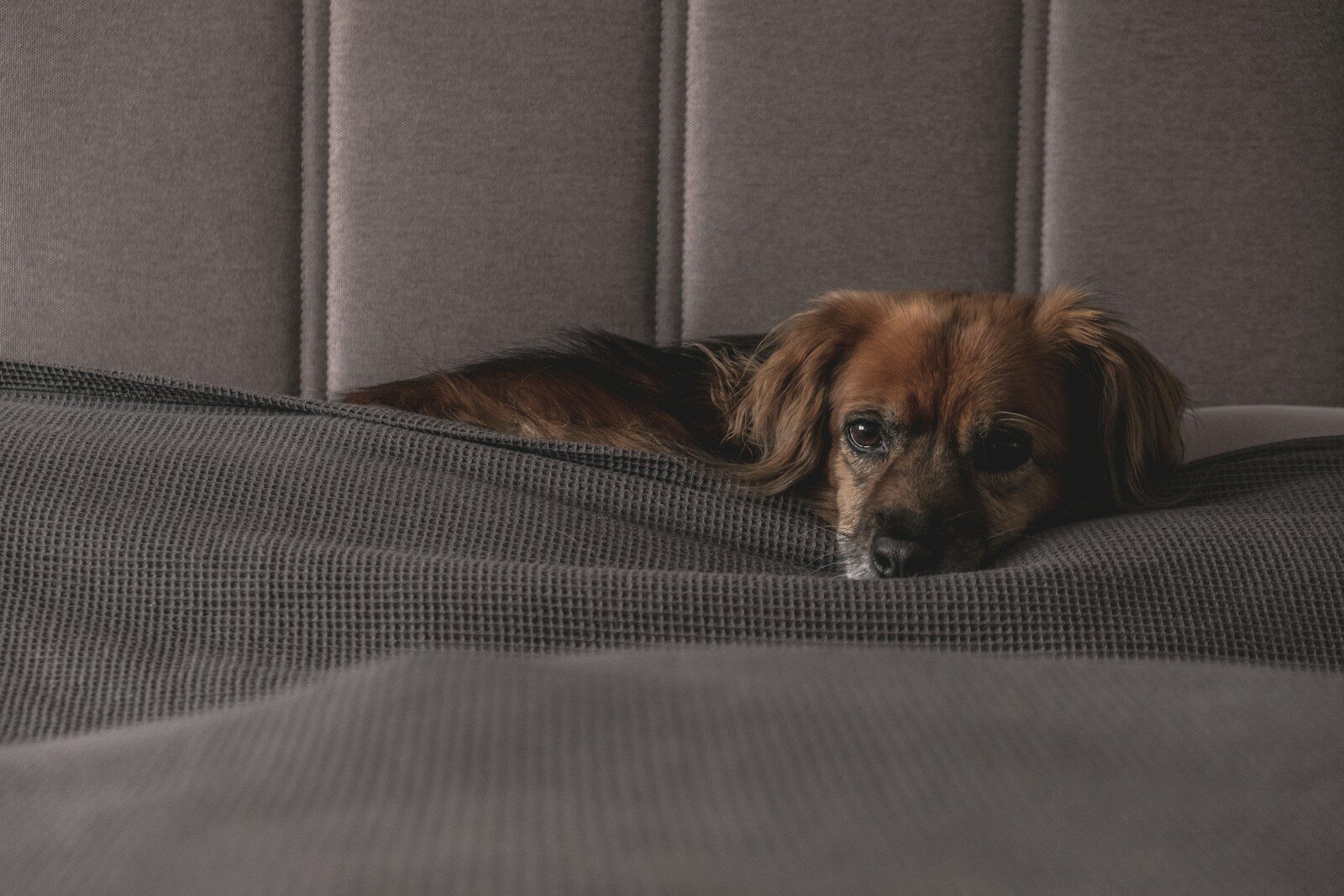
Pacing, whining, panting, and restlessness after dark — dog anxiety at night is stressful for both you and your pet. While daytime anxiety gets a lot of attention, nighttime anxiety is often overlooked despite being incredibly disruptive. Understanding the root cause is the key to helping your dog finally get a good night’s sleep.
Why Dogs Get Anxious at Night
The quiet darkness amplifies fears and discomfort that your dog can more easily ignore during busy daytime hours. Separation from you — even just being in a different room — can trigger insecurity. Older dogs may experience cognitive dysfunction syndrome, a condition similar to dementia that causes confusion and anxiety, especially after dark.
Pain from arthritis or other conditions tends to worsen at night when the body slows down. Additionally, dogs with poor vision may become anxious in low-light conditions because they can’t see their surroundings clearly.
Signs of Nighttime Anxiety in Dogs
Common signs include pacing or inability to settle, excessive panting when it’s not hot, whining or barking at night, destructive behavior in the dark, trembling or shaking, following you from room to room at bedtime, and attempting to escape or hide. If these behaviors are new or sudden, a veterinary checkup should be your first step to rule out pain or illness.
7 Calming Strategies That Work
Create a consistent bedtime routine — dogs thrive on predictability. A final walk, a small treat, and a command like “bedtime” signal that it’s time to wind down. Make their sleeping area comfortable and secure with a cozy bed in a quiet corner. A crate with a blanket draped over three sides can create a den-like feeling of safety.
White noise or calming music can mask outside sounds that trigger anxiety. Leave a nightlight on for dogs who seem disoriented in the dark. Calming treats with melatonin or L-theanine can help take the edge off when given 30 minutes before bed. Exercise your dog well during the day — a physically tired dog sleeps much better.
For severe cases of dog anxiety at night, consult your veterinarian about anti-anxiety medication. Prescription options like trazodone are commonly used for nighttime anxiety and can be life-changing.
Frequently Asked Questions
Q: Why is my dog suddenly anxious at night?
A: Sudden nighttime anxiety often points to pain, illness, or cognitive decline. A vet visit is recommended to rule out medical causes.
Q: Should I let my anxious dog sleep in my bed?
A: If it helps them settle and doesn’t disrupt your sleep, allowing your dog on the bed can reduce anxiety. It won’t create behavioral problems.
Q: Do calming treats work for nighttime anxiety?
A: Calming treats with melatonin are especially effective for nighttime use because melatonin naturally promotes sleep.